
Midjourney V7 vs GPT Image 2: Which Should You Use?
Decide between Midjourney V7 and GPT Image 2 based on your project's needs for text, editing, photorealism, or character consistency.
GPT Image 2 and Midjourney V7 each excel in distinct areas, making the choice between them dependent on your specific project requirements. GPT Image 2, OpenAI's latest image model released April 21, 2026, is superior for in-image text, multilingual rendering, API access, and its availability via ChatGPT's free tier [S4], [S5]. Midjourney V7, released April 3, 2025, remains the stronger contender for photorealism, artistic control, and consistent character generation through its Omni Reference feature [S1], [S3].
It's important to note the version status: Midjourney V7 was superseded as the default by V8.1 on June 10, 2026. However, V7 is still selectable via --v 7, and V8.1's Omni Reference feature internally relies on V7, ensuring V7's continued relevance for specific workflows [S1], [S3]. As of July 2026, OpenAI has not announced a GPT Image 3 [S4].
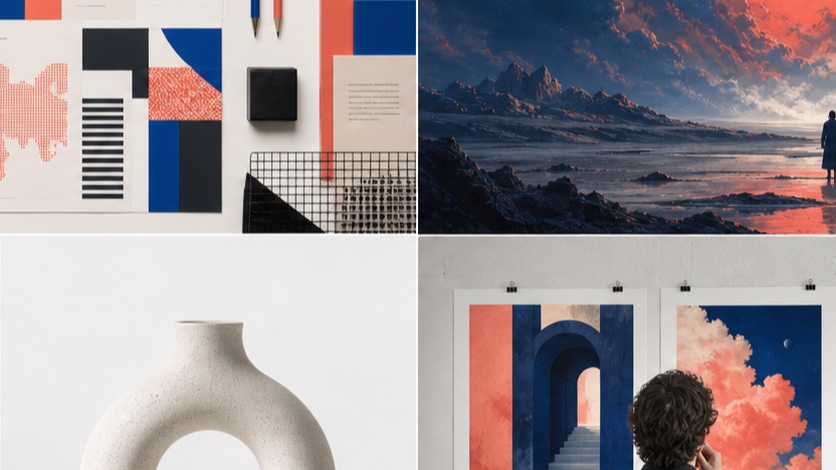
Test method and comparison criteria
This comparison is built on official OpenAI and Midjourney documentation, alongside widely accepted community observations and the general consensus from platforms like Artificial Analysis Image Arena. We do not present specific Elo numbers, which can vary by variant and source, but acknowledge such crowdsourced blind rankings as a standard for broad performance assessment. Our focus is on practical application and task fit, rather than a proprietary benchmark.
Side-by-side results by task
When evaluating GPT Image 2 against Midjourney V7, a clear pattern emerges: GPT Image 2 excels where structure, text, or API integration are critical, while Midjourney V7 shines in visual fidelity, texture, and artistic control. The right choice hinges on identifying your primary bottleneck.
GPT Image 2 at a Glance
GPT Image 2, introduced on April 21, 2026, supports both image generation and editing, offering flexible image sizes and high-fidelity image inputs [S4], [S5]. It powers ChatGPT's image generation capabilities and offers API access for developers [S5].
Strengths:
- In-image text rendering: Near-perfect across various scripts, including CJK, Devanagari, Arabic, and Korean, a significant advantage over Midjourney V7 [S4].
- Layouts: Capable of generating complex layouts where text and images are intricately interleaved [S4].
- Editing: Precise localized edits are possible through its
/v1/images/editsendpoint [S5]. - API Access: Offers official API endpoints (
/v1/images/generationsand/v1/images/edits) for integration into custom applications [S5]. - Free Access: Available with limited generations via ChatGPT's free tier [S5].
Limitations:
- Content Filtering: Users report aggressive content filtering that can restrict creative freedom [S4].
- Reference Control: Lacks a direct equivalent to Midjourney's Omni Reference for consistent character or object portrayal across multiple images.
- Pricing: Token-based pricing can be unpredictable at scale [S5].
Midjourney V7 at a Glance
Midjourney V7 launched on April 3, 2025 [S1]. While V8.1 became the default on June 10, 2026, V7 remains accessible via the --v 7 parameter. Crucially, V8.1's Omni Reference feature still utilizes V7 internally for its core functionality [S1], [S3]. V7 supports various aspect ratios and introduced Niji 7 for anime-specific work [S1], [S2].
Strengths:
- Photorealism: Often cited as best-in-class for realistic textures, skin, and objects [S1].
- Artistic Control: Offers extensive parameters for fine-tuning aesthetics, including Personalization, Style Reference (
--sref), and Moodboards [S2]. - Character Consistency: Omni Reference (
--oref) is a standout feature for maintaining character or object identity across multiple images [S3]. It automatically uses V7 and accepts an image and text prompt [S3]. - Rapid Iteration: Draft Mode allows for significantly faster image generation at reduced GPU cost, ideal for exploring many variations [S1].
- Creative Freedom: Generally has less aggressive content filtering compared to GPT Image 2.
Limitations:
- In-image Text: Lags behind GPT Image 2 in rendering accurate and legible text within images.
- API Access: No official public API, relying on third-party solutions which may lack production reliability.
- Free Access: No free tier available; trials have been paused since 2024.
- Native HD: While V8.1 supports native HD, V7's standard output is SD, and editing an HD image in V8.1 can revert it to SD [S1].
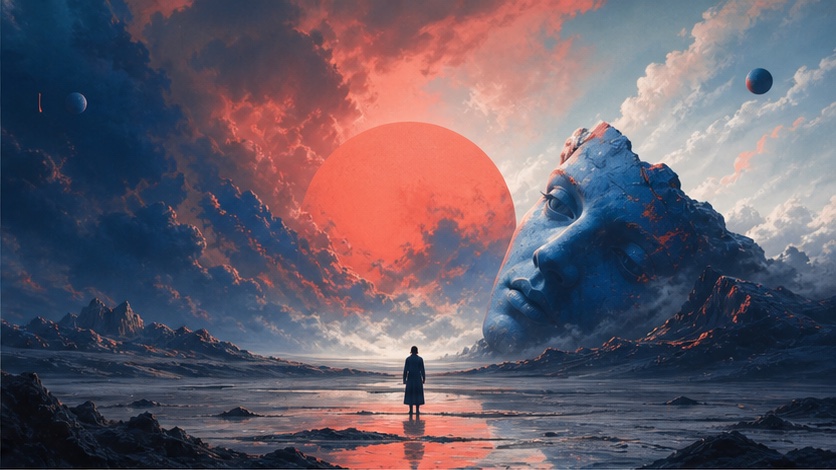
Control, editing, text and reference-image differences
These models diverge significantly in their approach to granular control, editing capabilities, text integration, and the use of reference images.
Text Rendering
GPT Image 2 holds a decisive advantage in rendering in-image text. Its ability to accurately generate text in multiple languages and scripts (CJK, Devanagari, Arabic, Korean) makes it the go-to for any visual asset requiring embedded copy, such as marketing posters, infographics, or editorial layouts [S4]. Midjourney V7's text capabilities are comparatively weaker, often producing garbled or inaccurate text.
Image Editing
GPT Image 2 offers robust image editing functionalities through its /v1/images/edits API endpoint, allowing for precise localized modifications [S5]. This is particularly useful for refining generated images or making specific changes without regenerating the entire image. Midjourney V7's editing options are more limited, primarily focusing on variations, panning, and zooming, with some operations potentially reverting HD images to SD [S1].
Reference Control
Midjourney V7's Omni Reference (--oref) is a unique and powerful feature for maintaining visual consistency of a character, object, or style across multiple generated images [S3]. By accepting a reference image and a text prompt, it ensures that key visual elements are carried through, even as the scene or context changes. This is invaluable for character-driven narratives or brand consistency. GPT Image 2, while capable of handling multi-character identity within a single image, lacks a comparable feature for consistent referencing across separate generations.
Prompt Adherence and Aesthetics
Both models demonstrate high prompt adherence, but their aesthetic biases differ. Midjourney V7 is celebrated for its photorealism, rich textures, and artistic output, often producing images with a distinct, polished aesthetic [S1]. GPT Image 2, while also capable of high-quality visuals, tends towards a more instruction-controlled, clean aesthetic, particularly strong in structured layouts [S4].
Cost and workflow comparison
Understanding the pricing models and workflow implications is crucial for long-term production.
Pricing
- GPT Image 2: Operates on a token-based pay-per-use model. Costs vary by input/output type and resolution, with image output potentially ranging from ~$0.01 to ~$0.17 per square image [S5]. This model is flexible for sporadic or low-volume use but can become unpredictable at high scale.
- Midjourney V7: Uses a flat subscription model, with tiers offering different amounts of 'Fast' GPU time and unlimited 'Relax' mode for higher tiers. Plans range from $10/month for basic to $120/month for mega, with annual discounts available. Extra GPU time can be purchased [S1]. This model offers cost predictability for consistent, high-volume usage.
Workflow
- GPT Image 2: Offers official API access, enabling seamless integration into automated workflows and custom applications [S5]. Its availability via ChatGPT's interface also provides a user-friendly conversational workflow. The editing API is a significant workflow advantage for iterative refinement.
- Midjourney V7: Primarily accessed through its web interface or Discord. While the web app is mature, the lack of an official public API means integration into automated pipelines often relies on unofficial methods, which may not be suitable for production environments. Draft Mode, however, significantly speeds up the initial ideation phase [S1].
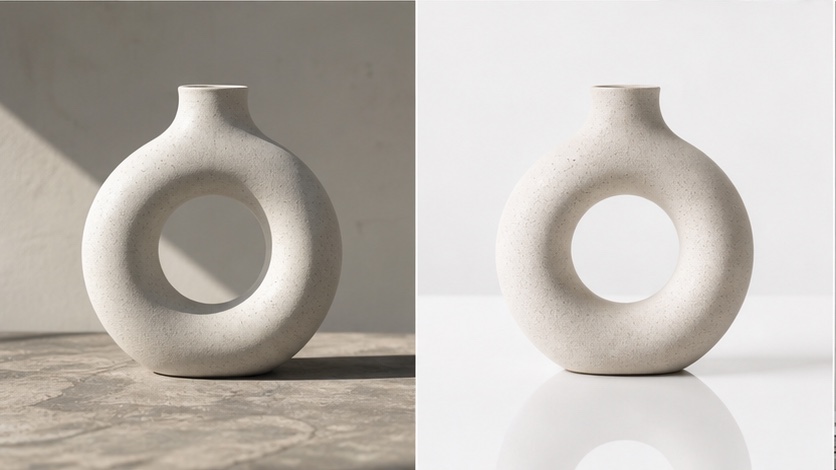
Which model should you choose?
The decision between Midjourney V7 and GPT Image 2 is a strategic one, best made by aligning the model's strengths with your project's core requirements. Neither model is universally superior; rather, they excel in different domains.
Decision Table: GPT Image 2 vs Midjourney V7
| Use Case / Feature | GPT Image 2 | Midjourney V7 |
|---|---|---|
| In-image Text | Strong, multilingual, accurate [S4] | Weaker, often garbled |
| Photorealism | Strong, clean | Best-in-class, rich textures [S1] |
| Character Consistency | Multi-character identity (single image) | Omni Reference wins (across scenes) [S3] |
| Image Editing | Precise /v1/images/edits [S5] |
Limited (variations, pan, zoom) [S1] |
| API Access | Official, paid Tier 1+ [S5] | None (third-party proxies only) |
| Free Access | ChatGPT free tier (limited) [S5] | None (trials paused) |
| Multilingual Support | CJK, Devanagari, Arabic, Korean [S4] | English-first |
| Creative Freedom | Aggressive content filtering | Less filtering, broader artistic range |
| Workflow Speed | Standard generation | Draft Mode for rapid iteration [S1] |
| Pricing Model | Token pay-per-use [S5] | Flat subscription [S1] |
When to choose GPT Image 2:
Choose GPT Image 2 if your primary need involves:
- Marketing materials with text: Posters, ads, product packaging, or social media graphics requiring legible, embedded copy.
- Editorial layouts & infographics: Any visual content where text and image must interleave seamlessly and accurately.
- API-driven pipelines: For automated image generation or editing integrated into larger systems.
- Multilingual content: Generating visuals with text in non-English scripts.
- Conversational editing: Leveraging ChatGPT's interface for iterative refinements.
- Casual or evaluation use: Utilizing the free tier for exploration.
When to choose Midjourney V7:
Opt for Midjourney V7 when your project demands:
- Photoreal portraits & lifestyle shots: Achieving highly realistic skin, textures, and natural lighting.
- Consistent characters across scenes: Using Omni Reference for maintaining identity in narratives or series [S3].
- Anime & stylized art: Leveraging Niji 7 for specialized anime aesthetics [S1].
- Rapid ideation & exploration: Utilizing Draft Mode to quickly generate and review many variations [S1].
- Maximum creative freedom: When less restrictive content filtering is preferred for artistic or conceptual work.
- Brand-consistent style at scale: For projects where a specific artistic style needs to be maintained across many assets.
Ultimately, the best approach for professional workflows is often to leverage both models, playing to their respective strengths. This hybrid strategy minimizes bottlenecks and maximizes output quality across diverse tasks.
Open GPT Image 2 on PixMind
Open Midjourney v7 on PixMind
FAQ
Is Midjourney V7 still available?
Yes. While V8.1 became the default on June 10, 2026, you can still select V7 using the --v 7 parameter [S1]. Furthermore, V8.1's Omni Reference feature internally uses V7, ensuring its continued relevance for character consistency tasks [S3].
Which model renders text better?
GPT Image 2 decisively renders text better. Its near-perfect in-image text rendering across various scripts, including CJK, Devanagari, Arabic, and Korean, is a key advantage over Midjourney V7 [S4].
Is GPT Image 2 free?
Partially. GPT Image 2 is available with limited generations through ChatGPT's free tier. For more extensive use, it operates on a token-based pay-per-use model via its API [S5]. Midjourney V7 does not offer a free tier.
Which is better for character consistency?
Midjourney V7, specifically through its Omni Reference (--oref) feature, is superior for maintaining character consistency across multiple images [S3]. While GPT Image 2 handles multi-character identity within a single image well, it lacks a comparable cross-image reference mechanism.
Will there be a GPT Image 3?
As of July 2026, OpenAI has not announced a GPT Image 3. GPT Image 2 remains their current latest image model [S4].
The Verdict
Choosing between Midjourney V7 and GPT Image 2 is a matter of matching the tool to the task, not a judgment of overall quality. Both are leading AI image models in 2026, and their strengths are complementary. Use GPT Image 2 for any project requiring accurate in-image text, API integration, or multilingual support. Opt for Midjourney V7 when photorealism, consistent characters, rapid artistic iteration, or maximum creative freedom are paramount.
If you must choose only one, identify your most frequent bottleneck. Text and API needs point to GPT Image 2. Visual fidelity and character consistency point to Midjourney V7. Often, the most efficient strategy is to utilize both, leveraging their specialized capabilities to achieve optimal results across your diverse creative needs.