
Seedance 2.5: ByteDance's 30-Second 4K AI Video Model, Explained | PixMind
Seedance 2.5: ByteDance's 30-Second 4K AI Video Model, Explained
In June 2026, ByteDance unveiled its newest AI video generation model, Seedance 2.5, at a launch event in Beijing. The successor to Seedance 2.0 is built around two upgrades: generating 30-second 4K video from a single prompt, and raising the reference-material limit from 12 to 50. According to CNET, the model is slated to land in China in July, with release dates for other countries yet to be announced.
If you're trying to figure out what Seedance 2.5 is, how it improves on 2.0, or whether you can actually use it yet, this article lays out everything known so far—core specs, realistic use cases, a comparison against Seedance 2.0 and rivals like Veo 3 / Kling / Sora, prompt-writing guidance, and an FAQ.
The two core upgrades in Seedance 2.5
A single prompt for 30-second 4K video
This is the upgrade drawing the most attention. The model can produce a 30-second, 4K-resolution clip in a single generation, with no need to generate segments and stitch them together. For creators, that means more coherent shot language and far less fragmentation in the workflow—a single take can carry the full scene setup, camera movement, and action progression.
Until now, most AI video models topped out at roughly 5 to 10 seconds per generation. A single 30-second segment is a clear step up. It pushes text-to-video from "generate one shot" toward "generate a full narrative beat," which is exactly the threshold AI video tools need to cross before they're useful in real advertising or storytelling pipelines.
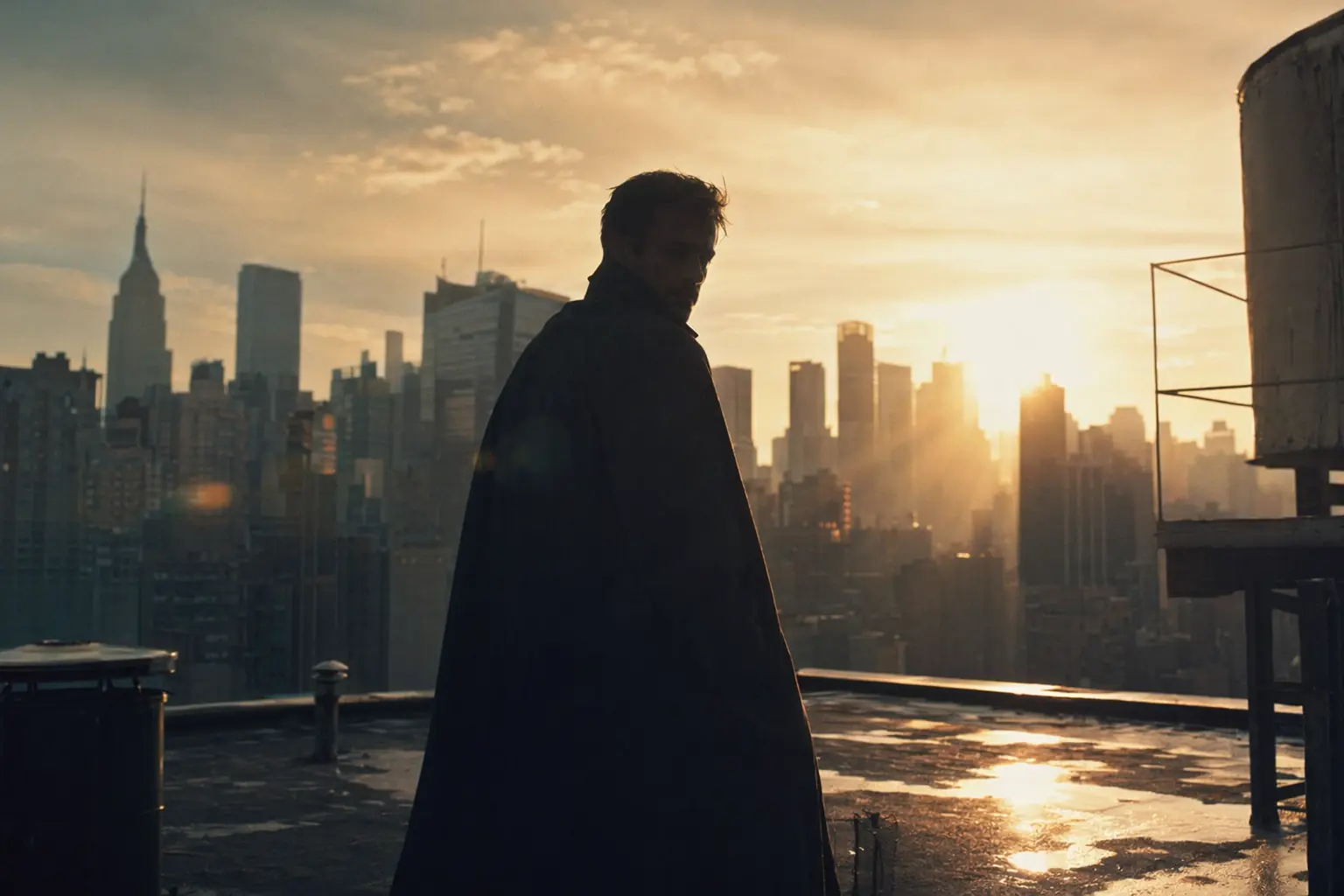
The image above is illustrative—meant to convey the feel of a single 30-second cinematic take—and is not an actual Seedance 2.5 output. We'll replace it with real results as soon as the model goes live.
Reference materials raised from 12 to 50
In the Seedance 2.0 era, users could attach at most 12 reference materials; 2.5 raises that cap to 50, and reference types now span images, video, and audio. The more references you provide, the finer your control over framing, character appearance, camera rhythm, and even musical style.
This upgrade matters most for long-standing pain points like character consistency and style coherence—you can anchor the same character or visual style from multiple angles and sources, making the output controllable instead of a fresh roll of the dice every time. Across AI video generators, keeping a face and outfit consistent across shots has always been harder than improving resolution, and 50 reference slots hand creators a much stronger anchoring toolkit.
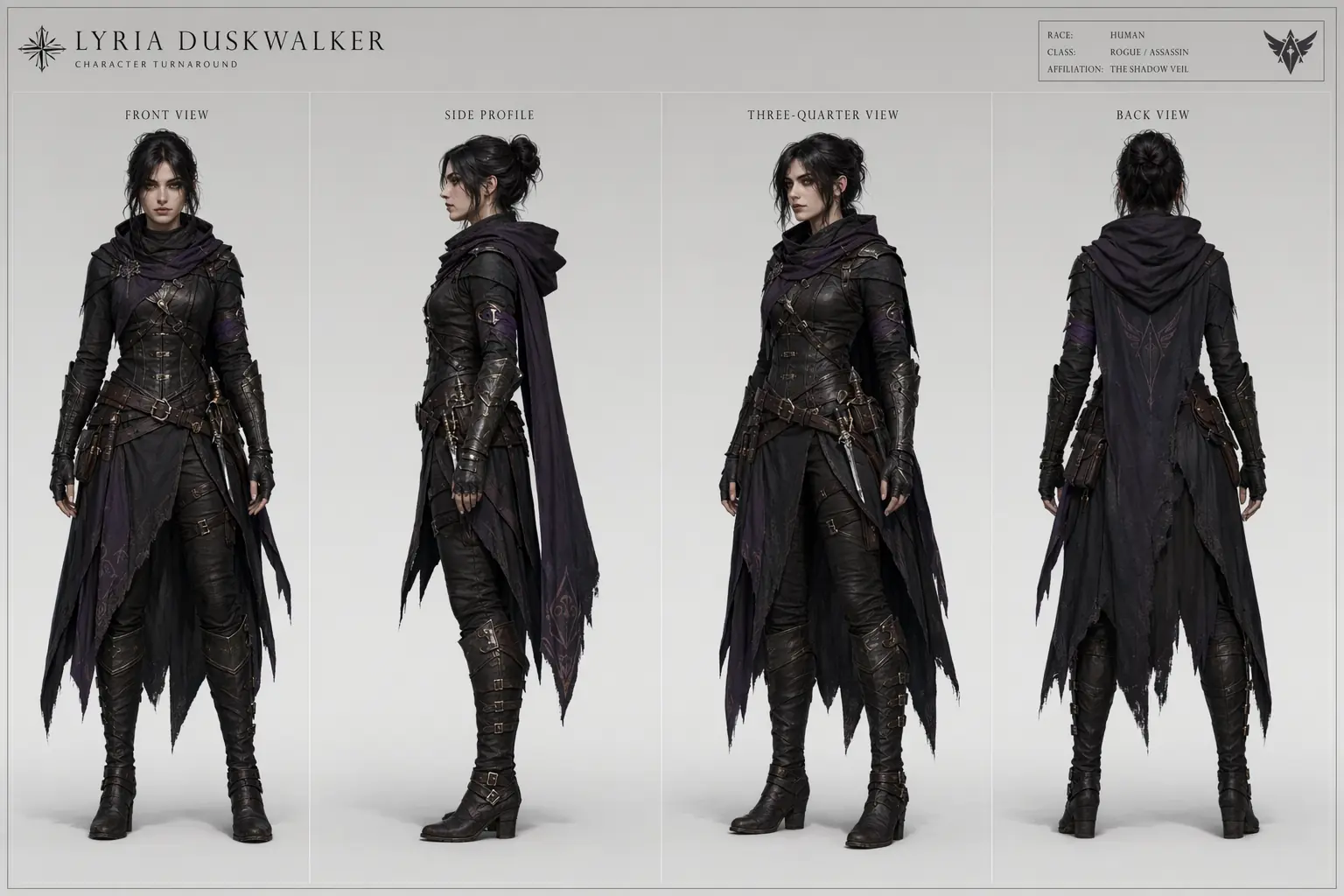
This multi-angle reference sheet illustrates the idea of "anchoring one identity with multiple references" and is not an actual Seedance 2.5 output.
What Seedance 2.5 can do: realistic use cases
⚠️ The scenarios below are projected use cases inferred from ByteDance's announced specs (30-second 4K, 50 reference materials). The model is not publicly available yet and these are not hands-on tests. Once it launches, we'll swap this section for real results and prompts.
Use case 1: 30-second brand ads. Producing a 30-second spot used to mean generating four to six 5-second clips and editing them together, with shot continuity and color grading as the hard parts. The single-take 30-second 4K combination makes "one prompt, one finished ad" plausible—product reveal, scene transition, and closing logo animation can all live in the same clip, cutting stitching losses. The likely prompt pattern: write the shot list first (framing, camera move, duration), then layer in product and brand keywords.
Use case 2: Multi-reference narrative shorts. With 50 reference materials, you can feed the model the same character's front face, profile, full body, costume details, and hairstyle all at once, keeping the lead's face and outfit consistent throughout a 30-second story. This is especially valuable for story-driven short video and serialized IP content, where you no longer rely on luck to keep a character recognizable.
Use case 3: On-brand series assets. Feed brand visual guidelines (color palette, typography, layout references) as reference materials, and the model can steadily output a whole set of same-style short videos—useful for daily social posting, e-commerce detail pages, and any workflow that needs volume plus consistency.
Who Seedance 2.5 is for
Not every creator gets the same value out of 2.5. Breaking the audience apart makes it easier to judge whether it's worth waiting for.
Brands and ad teams are the most obvious beneficiaries. Thirty seconds in a single take happens to match a standard ad spot, and 4K clears the resolution bar for paid placements—skipping the stitch is a concrete saving in production hours. Story and short-drama creators care more about the character consistency that 50 reference slots unlock: whether a lead "keeps the same face" is what decides audience retention. E-commerce and social operators want high-volume, on-brand batch assets, and the multi-reference system can hold a steady look across product videos.
By contrast, casual users who just want a quick 5-second motion meme or a fast visual demo will find 2.5's long duration and high specs redundant—Seedance 2.0 or another lightweight AI video tool is the more sensible pick. In other words, 2.5 is positioned closer to professional production than to a toy.
How it compares: Seedance 2.5 vs Veo 3 / Kling / Sora
Placing Seedance 2.5 next to the leading AI video generators clarifies its positioning. Caveat first: the rival specs below come from each vendor's public disclosures, while Seedance 2.5 is marked "announced / awaiting real tests"—actual performance waits for hands-on comparison after launch.
Google's Veo 3 (see the Veo tool page on PixMind) excels at image quality and audio sync, with single-take length also edging toward 30 seconds, making it 2.5's most direct rival for high-end ads and cinematic narrative. Kuaishou's Kling leads in Chinese-scene comprehension and natural human motion, with strong adoption among Chinese creators. OpenAI's Sora targets general-purpose long video and emphasizes physical consistency, though its availability and pricing remain limited.
Against that field, Seedance 2.5's differentiator is the combination of "single-take 30-second 4K plus 50 multimodal references"—stacking duration, resolution, and controllability in one model. If the release version delivers on that stably, it carves out a unique position in scenarios that need both long narrative and character consistency. But aesthetics, motion physics, and generation speed are still unknowns; a fair verdict needs real side-by-side tests.
How to write prompts for Seedance 2.5
The model isn't live, so we can't ship tested prompts yet—but given the "single 30-second take plus multi-reference" positioning, we can sketch a reusable prompt skeleton. The core idea is to split each prompt into three layers: shot list, subject description, and style-with-references.
The shot-list layer spells out framing (close-up / medium / wide), camera move (push / pull / pan / follow), and rhythm (slow push / fast cut), with a rough duration per shot so the 30 seconds have structure rather than turning into a blur. The subject layer fixes the character, action, setting, and lighting—specificity is what tames the model's randomness. The style-and-reference layer ties style keywords (cinematic / film grain / soft light) to the intent of each reference, telling the model "this reference anchors the face, that one anchors the palette."
If you're unsure how to reverse-engineer an existing video into a reusable prompt, start with the video-to-prompt tool to break a reference clip into text, then rewrite it into a Seedance 2.5-ready long prompt using the three-layer skeleton above. It's the most practical bridge between "writing one descriptive line" and "writing a controllable, production-grade prompt."
Seedance 2.5 vs 2.0: spec comparison
| Dimension | Seedance 2.0 | Seedance 2.5 |
|---|---|---|
| Per-generation length | ~5 to 10 seconds | 30 seconds, single take |
| Resolution | ~1080p | 4K |
| Reference-material limit | 12 | 50 |
| Reference types | Mostly images | Images / video / audio |
| Typical use case | Short shots, single actions | Long narrative, character consistency, ad spots |
Limitations and open questions
To be clear: the capabilities above come from officially announced specs reported at the launch event and in the press. Real generation quality, stability, per-generation time, pricing, and content-moderation strictness all have to wait until the model is actually open. The international release date is unset; the July China launch is a planned date and may shift. Treat it as a "next-generation video model worth tracking," not a capability you can put into production today.
A common misconception is "double the specs means double the experience." Thirty seconds of 4K multiplies VRAM and compute pressure, and first-frame wait time, failure rate, and whether 4K needs a higher subscription tier are all undisclosed. Likewise, 50 reference materials test how well the model weights conflicting reference types—feeding too many can backfire. Specs are a ceiling; whether the model can reliably hit that ceiling is what actually decides whether it's good.
FAQ
What is Seedance 2.5?
Seedance 2.5 is ByteDance's next-generation AI video generation model, announced in June 2026 and the successor to Seedance 2.0. It's built around generating 30-second 4K video from a single prompt and raising the reference-material limit from 12 to 50, with reference types spanning images, video, and audio.
When is Seedance 2.5 coming out?
According to CNET, the model is planned to launch in China in July, with release dates for other countries not yet announced. The exact date is subject to ByteDance's official confirmation and may change.
What's the difference between Seedance 2.5 and Seedance 2.0?
Four main differences: per-generation length rises from roughly 5–10 seconds to a single 30-second take; resolution goes from ~1080p to 4K; the reference-material cap goes from 12 to 50; and reference types expand from mostly images to images, video, and audio.
Does Seedance 2.5 support character consistency?
Based on the announced specs, the 50-slot multimodal reference system is designed precisely to strengthen character consistency and style coherence—you can anchor one identity with multiple angles of the same character. Actual results await hands-on testing once the model opens.
Can I use Seedance 2.5 outside China?
As of the announcement, the international release date is unset. Whether and how non-China users can access it will depend on ByteDance's later announcements.
How does Seedance 2.5 compare to Veo 3?
Both target long-form, high-quality video generation. Veo 3 leads on image quality and audio-visual sync; Seedance 2.5's differentiator is the controllability from 50 multimodal references. A fair comparison needs same-prompt hands-on tests once Seedance 2.5 is available—don't call it on specs alone.
Conclusion
Seedance 2.5's two upgrades—single-take 30-second 4K and 50 reference materials—go straight at the two biggest pain points in AI video: clips are too short and characters and styles are hard to keep consistent. If the release version delivers on the launch specs, it'll be a model worth serious testing for anyone making short video, ads, or story-driven content. We'll publish a real hands-on comparison as soon as it ships, and update this piece into a tested edition.
Want to turn existing assets into reusable prompts first? Try PixMind's video-to-prompt and AI video generation tools—once Seedance 2.5 opens, those prompts port straight over. For more AI video and image tutorials, browse the PixMind blog.